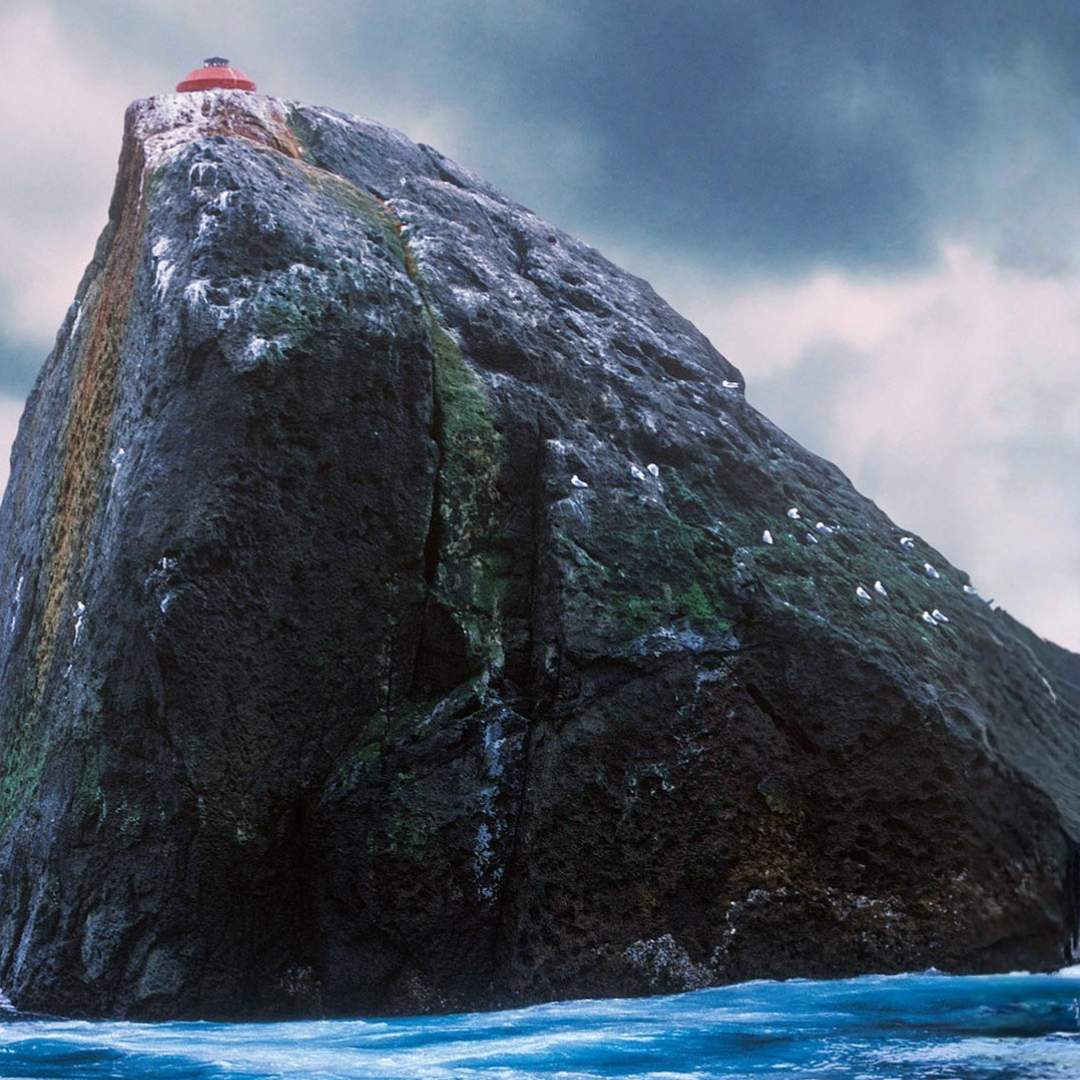
Soğuk Savaş’ın en şiddetli döneminde İngiltere de dahil birçok ülke, güvenlik konusunda paranoyaklık derecesinde hassastı. İngilizler’in yüzlerce kilometre uzağında yer alan ve 4 kişinin yan yana duramadığı bir kaya parçası böyle bir ortamda stratejik önemde görüldü. Donanma harekete geçti ve Rockall Operasyonu başladı.


English
The Island Seized by Britain Where Four People Could Barely Stand Side by Side
In 1955, the British Navy set out to seize a tiny rock in the middle of the ocean where nobody lived. It was not a city, a harbour or a military base. There were no houses, no trees and barely any flat ground to stand on. In fact, even four people standing side by side would have struggled to fit comfortably. But during the Cold War, this rock suddenly became important to the British. Its name was Rockall.
Rockall is a remote piece of rock in the North Atlantic, around 420 kilometres west of Scotland’s Outer Hebrides. The British naturalist James Fisher once described it as “the most isolated small rock in the oceans”.
That description was not an exaggeration. Rockall is only about 25 metres wide and rises 17 metres above sea level. Most of it is steep granite. The amount of flat ground suitable for standing is only a few metres across.
But in the 1950s, this tiny rock stopped being a place nobody cared about.
Cold War fears
In 1955, the Cold War was still in full force. NATO and Soviet submarines were patrolling the North Atlantic, and control of the seas mattered greatly to both sides.
At the same time, Britain had established a test range for American-made guided missiles on South Uist, east of Rockall. The British government feared that foreign agents might land on Rockall and use it to observe the missile tests.
It may sound strange. But in wartime, even a small rock could become a matter of national security.
The Queen gave the order
On 14 September 1955, Queen Elizabeth II approved the annexation of Rockall on behalf of the United Kingdom. The order given to the Royal Navy was clear: land on the rock, raise the British flag and claim Rockall in the Queen’s name.
The survey ship HMS Vidal reached Rockall on 15 September. The plan was to land men on the rock by helicopter. But the wind around this tiny outcrop in the middle of the Atlantic was so strong that the landing could not take place immediately.
The Navy had to wait for three days.
Eventually, three servicemen and the naturalist James Fisher landed on the rock. The British flag was raised, a plaque was fixed in place and Rockall was formally claimed for Britain.
More than a rock
James Fisher’s role was not only to witness the flag-raising. He also collected rock samples for the Geological Society of Britain. Rockall was the remnant of an eroded volcano, and its granite was considered unusual.
But Rockall’s importance changed over time. At first, the issue was security. Within a few decades, however, the waters around Rockall became controversial because of fishing rights and possible oil reserves.
In 1972, Britain formally incorporated Rockall into the United Kingdom and attached it to Scotland’s Western Isles. Ireland, Iceland and Denmark, however, also had their own claims and interests in the surrounding waters.
In other words, this tiny rock in the middle of the sea ended up on the table of several countries because of the waters around it.
Just a rock
The Rockall issue changed again with the 1982 United Nations Convention on the Law of the Sea. Under this agreement, rocks that cannot sustain human habitation or economic life do not generate large exclusive economic zones on their own.
When the United Kingdom accepted the convention in 1997, it effectively recognised Rockall as legally just a “rock”. As a result, Britain stepped back from its wider claims to fishing and mineral rights around Rockall.
A rock once claimed because of fears about Soviet spying had become part of a very different legal dispute.
A rock for adventurers
Staying on Rockall for any length of time is almost impossible. But that has not stopped adventurers from trying.
In 1985, former SAS soldier Tom McClean landed on Rockall and stayed there for 40 days and 40 nights. In 1997, Greenpeace activists landed on the rock and declared it the capital of a symbolic micro-state called the Global State of Waveland. Their aim was to protest against oil and mineral exploration in the area.
In 2014, Nick Hancock set a new record by staying on Rockall for 43 days. In 2023, another former soldier had to be rescued during his own record attempt after bad weather damaged his equipment.
Today, Rockall still stands alone in the North Atlantic, surrounded by wind and waves. There is no town, no harbour and no life on it. But this tiny rock has a story that stretches from Cold War fears to oil disputes, international law and the record attempts of adventurers.
So if you ever see Rockall on a map, do not think of it as just a forgotten dot in the ocean. The British Navy once waited for days to seize that tiny point in the sea.
İngiliz donanması 1955’de, denizin ortasında kimsenin yaşamadığı küçücük bir kayalığı ele geçirmek için harekete geçti. Burası bir şehir, liman ya da stratejik üs değildi. Üzerinde ev yoktu, ağaç yoktu, doğru düzgün yürünecek düz bir alan bile yoktu.
Rockall, İskoçya’nın Dış Hebrid Adaları’nın yaklaşık 420 kilometre batısında, Kuzey Atlantik’in ortasında yer alan ıssız bir kaya parçasıdır. İngiliz doğa bilimci James Fisher, burayı “okyanusların içindeki en izole küçük kaya” diye tarif etmişti.
Bu tarif abartılı değildi. Rockall yalnızca yaklaşık 25 metre genişliğinde ve deniz seviyesinden 17 metre yüksekliğindedir. Büyük kısmı dik granitten oluşur. Üzerinde ayakta durmaya elverişli düz alan ise sadece birkaç metredir.

Soğuk Savaş korkusu
1955’te Soğuk Savaş bütün hızıyla devam ediyordu. NATO ve Sovyetler Birliği’ne bağlı denizaltılar Kuzey Atlantik’te devriye geziyor, denizlerdeki hâkimiyet iki taraf için de büyük önem taşıyordu.
Aynı dönemde İngiltere, Rockall’ın doğusunda bulunan Güney Uist’te ABD yapımı güdümlü füzeler için bir test alanı kurmuştu. İngiliz hükümeti, yabancı ajanların Rockall’a yerleşerek bu testleri izleyebileceğinden endişe ediyordu.
Kraliçe’den emir geldi
14 Eylül 1955’te Kraliçe II. Elizabeth, Rockall’ın Birleşik Krallık adına sahiplenilmesini onayladı. Kraliyet Donanması’na verilen emir açıktı: Kayalığa çıkılacak, Birleşik Krallık bayrağı dikilecek ve Rockall Kraliçe adına alınacaktı.
HMS Vidal adlı araştırma gemisi 15 Eylül’de Rockall’a ulaştı. Plan, askerleri helikopterle kayalığın üzerine indirmekti. Fakat Atlantik’in ortasındaki bu küçücük kayada rüzgâr o kadar şiddetliydi ki çıkarma hemen yapılamadı.
Donanma üç gün beklemek zorunda kaldı.
Sonunda üç asker ve doğa bilimci James Fisher kayalığa çıktı. Birleşik Krallık bayrağı dikildi, bir plaka yerleştirildi ve Rockall resmen İngiltere adına sahiplenildi.

Bir kayadan fazlası
O gün Rockall’a çıkan James Fisher’ın görevi yalnızca bayrak törenine eşlik etmek değildi. Fisher, Britanya Jeoloji Derneği için kayadan örnekler topladı. Rockall, aşınmış eski bir volkanın kalıntısıydı ve buradaki granit oldukça özel görülüyordu.
Operasyonun baştlıca amacı güvenlikti. Ama birkaç on yıl içinde Rockall, çevresindeki denizler, balıkçılık ve muhtemel petrol rezervleri nedeniyle daha önemli ve tartışmalı bir yer haline geldi.
İngiltere, 1972’de Rockall’ı resmen Birleşik Krallık’a kattı ve İskoçya’nın Batı Adaları’na bağladı. Ancak İrlanda, İzlanda ve Danimarka da bölgedeki deniz hakları konusunda farklı iddialar ortaya koyuyordu.
Kısacası denizin ortasındaki bu küçücük kaya, çevresindeki suların kullanım hakkı yüzünden büyük ülkelerin masasına girdi.
stratejik adacıktan Sadece bir kaya parçasına
Rockall meselesi 1982’de imzalanan BM Deniz Hukuku Sözleşmesi’yle daha da değişti. Bu sözleşmeye göre üzerinde insan yaşamı bulunmayan ve ekonomik faaliyeti olmayan kayalıklar, tek başına geniş ekonomik deniz alanları oluşturmak için yeterli değildi.
Birleşik Krallık 1997’de bu sözleşmeyi kabul edince, Rockall’ın hukuken yalnızca bir “kaya” olduğunu tanımış oldu. Böylece Rockall çevresindeki geniş balıkçılık ve madencilik hakları iddiasından geri adım atıldı.

Maceraperestlerin kayası
Rockall’da insanın uzun süre kalması neredeyse imkânsızdır. Ama bu durum bazı maceraperestleri durdurmadı.
1985’te eski SAS askeri Tom McClean, Rockall’a çıkarak burada 40 gün 40 gece kaldı. 1997’de Greenpeace aktivistleri kayalığa gidip burayı “Küresel Waveland Devleti” adında sembolik bir mikro devletin başkenti ilan etti. Amaçları, bölgedeki petrol ve maden arama çalışmalarını protesto etmekti.
2014’te Nick Hancock, Rockall’da 43 gün kalarak yeni bir rekor kırdı. 2023’te ise başka bir eski asker, kötü hava koşulları nedeniyle rekor denemesi sırasında kurtarılmak zorunda kaldı.
Bugün Rockall hâlâ Kuzey Atlantik’in ortasında, rüzgârın ve dalgaların arasında tek başına duruyor. Üzerinde şehir yok, liman yok, hayat yok. Ama bu küçücük kaya, Soğuk Savaş korkularından petrol tartışmalarına, uluslararası hukuktan maceraperestlerin rekor denemelerine kadar uzanan ilginç bir hikâyeye sahip.
Kaynak 1: https://www.bbc.co.uk/culture/article/20250912-the-tiny-island-seized-by-britain-to-foil-the-ussr
Kaynak 2: http://news.bbc.co.uk/onthisday/hi/dates/stories/september/21/newsid_4582000/4582327.stm
Bir Cevap Yazın